

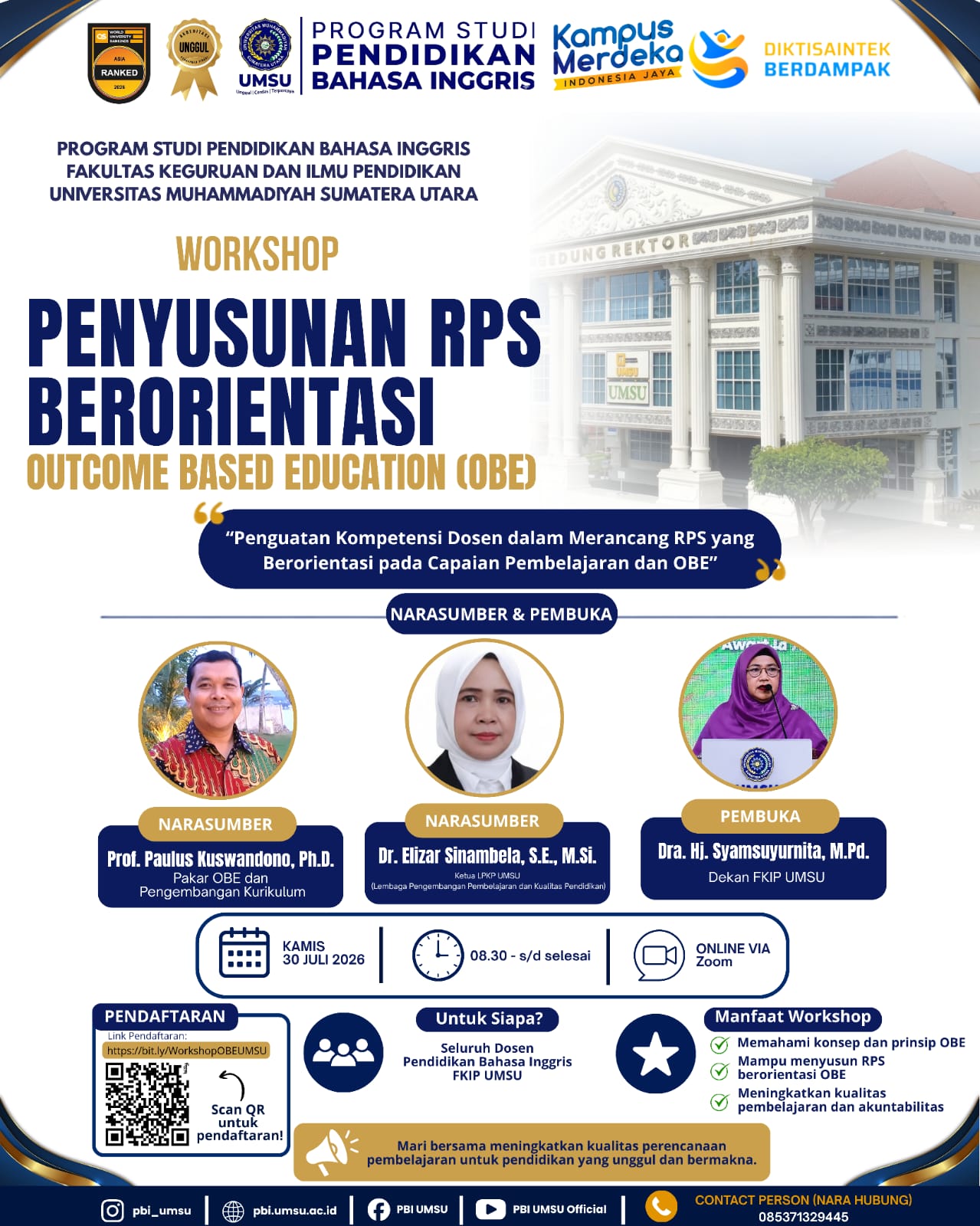
Medan, July 30, 2026 – The English Education Study Program, Faculty of Teacher Training and Education (FKIP), Universitas Muhammadiyah Sumatera Utara (UMSU) successfully organized the 2026 Workshop on Developing Outcome-Based Education (OBE)-Oriented Semester Learning Plans (Rencana Pembelajaran Semester/RPS) on Thursday, July 30, 2026, via Zoom Meeting. The workshop was conducted as part of the study program’s ongoing commitment to strengthening lecturers’ professional competence and continuously improving the quality of teaching and learning through the effective implementation of Outcome-Based Education (OBE).
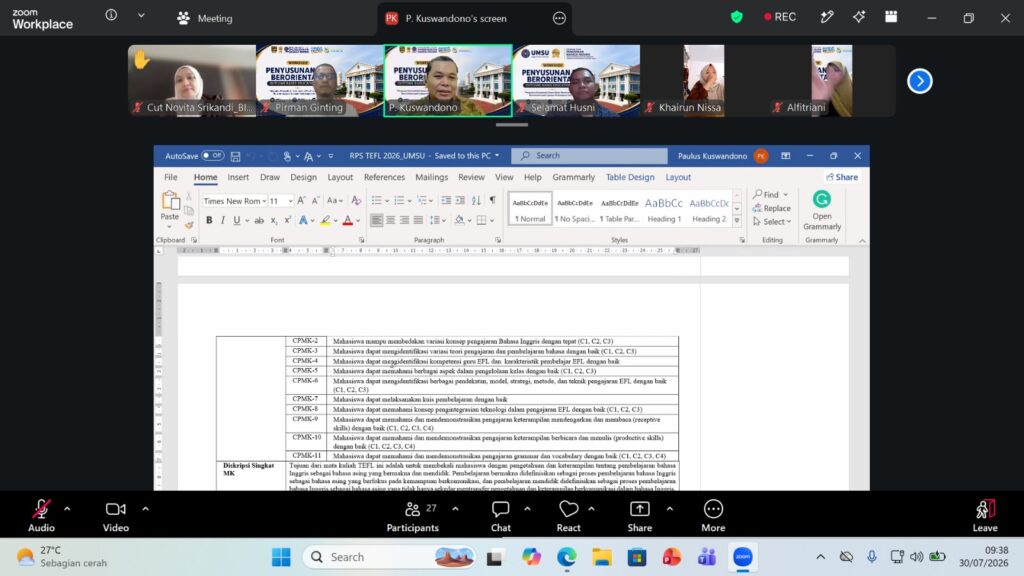
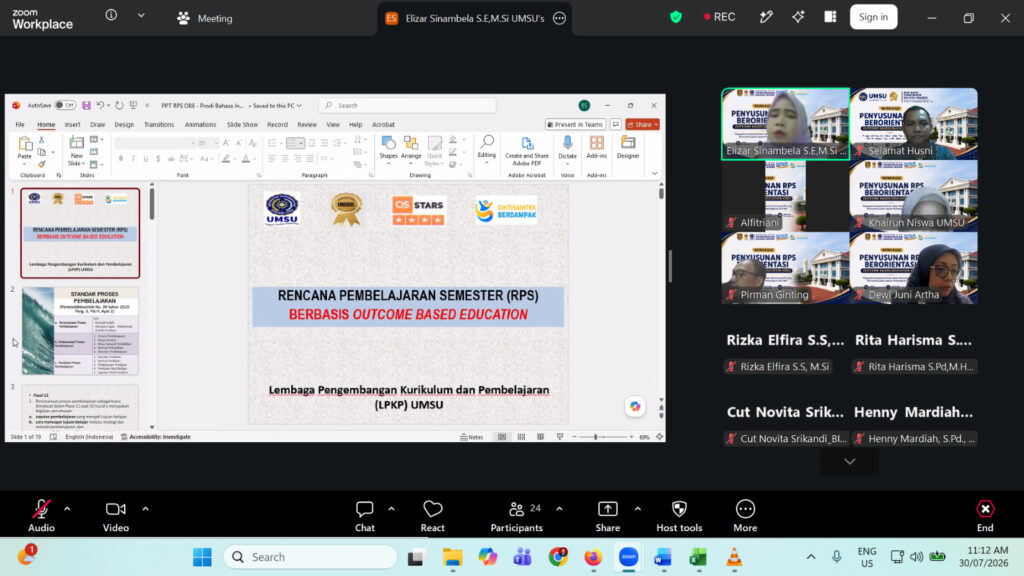
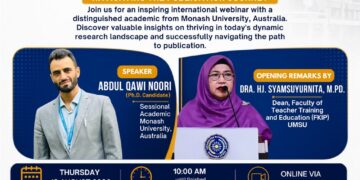
The event featured two distinguished speakers: Bapak Prof. Paulus Kuswandono, Ph.D., Professor of English Language Education at Universitas Sanata Dharma, and Ibu Elizar Sinambela, S.E., M.Si., Head of the Institute for Learning Development and Quality Assurance (LPKP), Universitas Muhammadiyah Sumatera Utara. The workshop focused on equipping lecturers with practical knowledge and strategies for developing high-quality Semester Learning Plans (RPS) that align learning outcomes, teaching and learning activities, and assessment with the principles of Outcome-Based Education.



 The workshop was officially opened by Dr. Hj. Dewi Kesuma Nasution, M.Hum., Vice Dean I of FKIP UMSU, representing the Dean of FKIP UMSU. In her opening remarks, she emphasized that Outcome-Based Education is not a new initiative within the Faculty of Teacher Training and Education, as it has been implemented for many years across the faculty. However, she stressed that continuous reminders and reinforcement remain essential, particularly regarding teaching documents such as the Semester Learning Plan (RPS), to ensure that OBE principles are consistently reflected in classroom practice.
“Outcome-Based Education has long been implemented in FKIP UMSU. Therefore, this workshop is not about introducing a new concept, but about reminding and strengthening our commitment to implementing OBE through well-prepared teaching documents. The Semester Learning Plan (RPS) plays a crucial role in ensuring that learning outcomes, learning activities, teaching strategies, and assessment are well aligned,” she stated.
Dr. Dewi also encouraged lecturers to continuously review and improve their teaching practices and learning documents in response to evolving educational standards, emphasizing that continuous quality improvement is fundamental to producing graduates who are competent, adaptive, and globally competitive.
In his welcoming remarks, Dr. Pirman Ginting, M.Hum., Head of the English Education Study Program, highlighted that the workshop represents one of the study program’s strategic initiatives to strengthen academic quality and support the successful implementation of Outcome-Based Education.
“The English Education Study Program is committed to continuously improving the quality of education through professional development initiatives for our lecturers. A well-designed Semester Learning Plan is more than an administrative requirement; it is the foundation of meaningful teaching and learning. Through this workshop, we aim to strengthen our lecturers’ understanding of Outcome-Based Education and ensure that every course is designed to achieve measurable learning outcomes while responding to the needs of students and stakeholders,” he remarked.
The first session was delivered by Prof. Paulus Kuswandono, Ph.D., who provided a comprehensive discussion on the philosophy and implementation of Outcome-Based Education in higher education. He explained how lecturers can design effective Semester Learning Plans by applying the principle of constructive alignment, ensuring that intended learning outcomes, teaching strategies, learning activities, and assessment methods are meaningfully connected. Participants actively engaged in discussions, sharing experiences and raising practical questions related to curriculum design, authentic assessment, and strategies for promoting higher-order thinking skills in English language education.
The second session was presented by Ibu Elizar Sinambela, S.E., M.Si., who discussed the institutional implementation of Outcome-Based Education within UMSU. She emphasized the importance of developing RPS documents that comply with university quality assurance standards while remaining aligned with national higher education policies. Her presentation also provided practical recommendations for continuously improving course documentation and fostering a sustainable culture of academic quality across study programs.
The workshop concluded with an interactive discussion and question-and-answer session, reflecting the participants’ enthusiasm for continuously enhancing their pedagogical competence and strengthening the implementation of Outcome-Based Education in their respective courses. The event concluded with closing remarks from the Head of the English Education Study Program, who expressed his appreciation to the speakers, faculty leadership, and all participants for their active engagement and commitment to educational excellence.
To extend the benefits of the workshop beyond the live session, the English Education Study Program FKIP UMSU has made the full recording publicly available on its official YouTube channel. Lecturers, students, and members of the wider academic community are invited to revisit the presentations and discussions through the following link:
🎥 Workshop on Developing Outcome-Based Education (OBE)-Oriented Semester Learning Plans (RPS) 2026
https://youtu.be/cv5xqPZ7Yng
By providing open access to the workshop recording, the study program aims to support continuous professional development and encourage broader dissemination of good practices in Outcome-Based Education.
The successful organization of this workshop reflects the English Education Study Program FKIP UMSU’s unwavering commitment to fostering academic excellence, strengthening lecturers’ professional competencies, and continuously enhancing the quality of teaching and learning. Through initiatives such as this, the study program continues to promote innovation in curriculum development, reinforce a culture of continuous quality improvement, and prepare future English educators who are competent, reflective, innovative, and ready to contribute to education at both the national and international levels.