

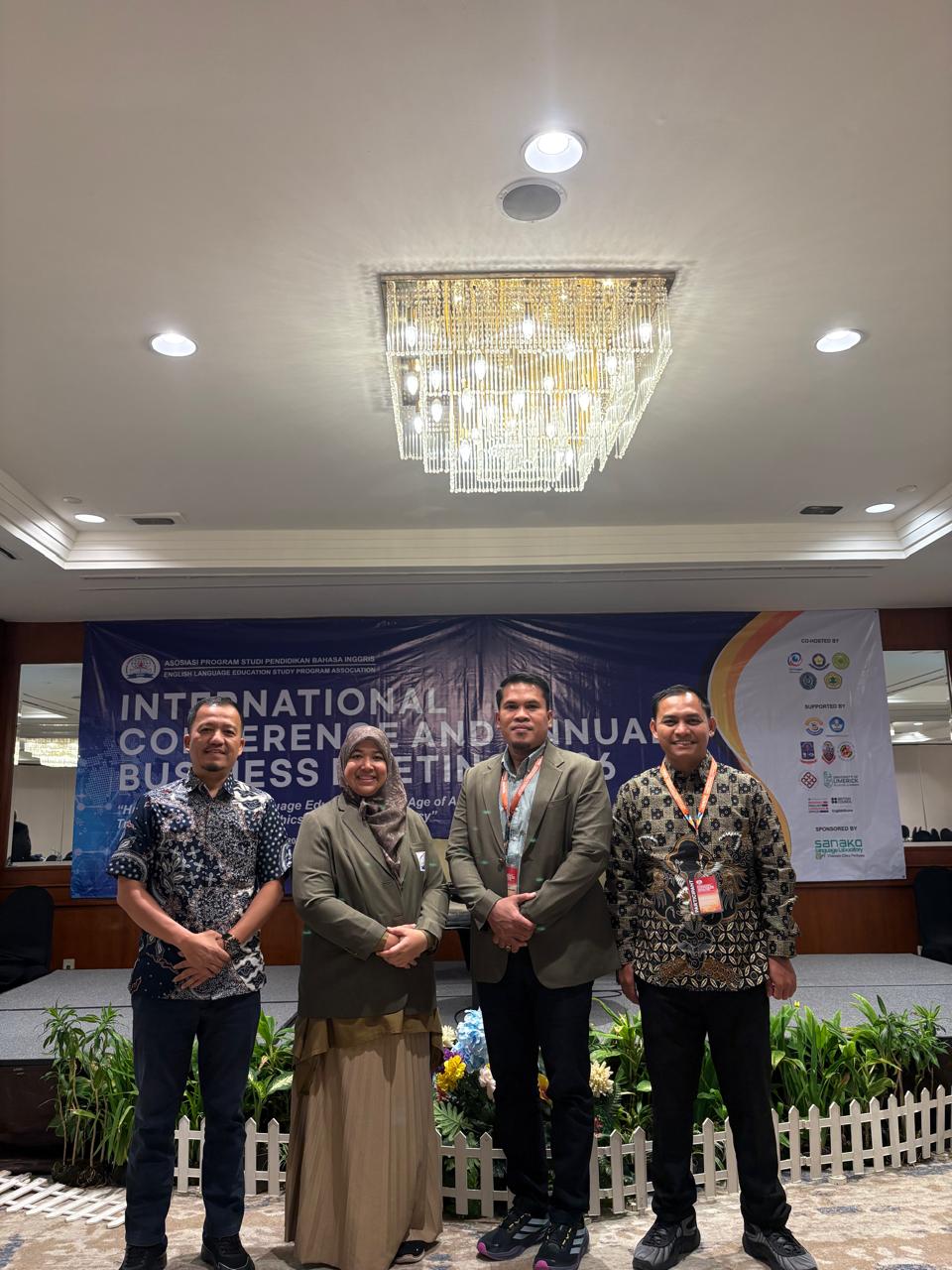
JAKARTA, September 11, 2026-The English Education Study Program, Faculty of Teacher Training and Education (FKIP), Universitas Muhammadiyah Sumatera Utara (UMSU) participated in the APSPBI International Conference and Annual Business Meeting (ICON-ABM) 2026, held in Jakarta on 10–11 September 2026. The participation reflected the study program’s commitment to strengthening academic engagement, expanding professional networks, sharing research and ideas, and contributing to the development of English language education in response to contemporary educational challenges.
The English Education Study Program was represented by three faculty members, namely Dr. Mandra Saragih, M.Hum., Vice Dean III for Student Affairs and Alumni of FKIP UMSU; Dr. Pirman Ginting, M.Hum., Head of the English Education Study Program; and Selamat Husni Hasibuan, Ph.D., Secretary of the English Education Study Program. Their participation represented both the faculty and the study program in an important academic forum that brought together members of the English language education community.
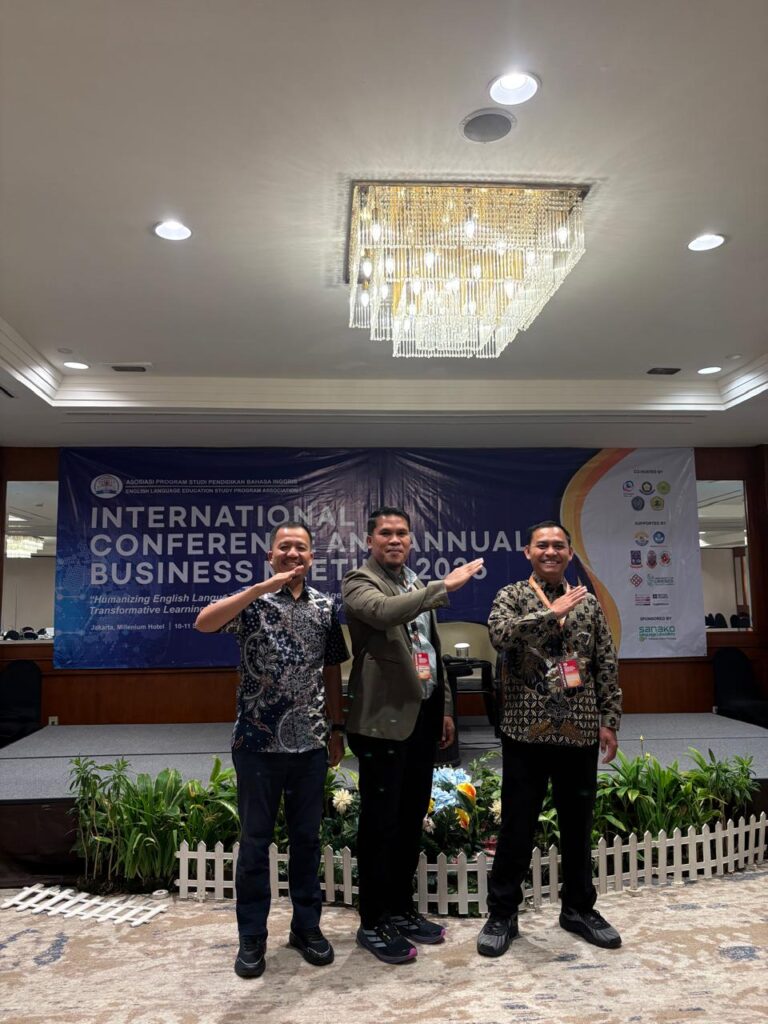
Organized by the Asosiasi Program Studi Pendidikan Bahasa Inggris (APSPBI), ICON-ABM 2026 provided a forum for English education academics and practitioners to exchange perspectives and discuss current and emerging issues in the field. The conference carried the theme “Humanizing English Language Education in the Age of AI,” highlighting the need to respond to the rapid development of Artificial Intelligence while maintaining the human values that remain central to education.
The theme was particularly relevant to the current transformation of English language education. Artificial Intelligence and generative AI are increasingly influencing teaching, learning, academic writing, assessment, and professional practices. At the same time, educators are challenged to ensure that technological innovation does not diminish critical thinking, creativity, human interaction, empathy, student agency, and authentic learning experiences.
Dr. Pirman Ginting, M.Hum., Head of the English Education Study Program, said that participation in the conference was an important opportunity for the study program to strengthen its academic engagement and establish connections with other institutions and scholars.
“Our participation in ICON-ABM 2026 reflects our commitment to continuously strengthening the academic development of the English Education Study Program. This conference provides an important space for us to exchange ideas, learn from other institutions, and build stronger academic networks for future collaboration.”
Dr. Pirman also emphasized that the advancement of AI should be accompanied by a strong commitment to human-centered education. “The theme of humanizing English language education in the age of AI is highly relevant to our current context. AI offers enormous opportunities for teaching and learning, but our responsibility as educators is to ensure that technology supports, rather than replaces, the human dimensions of education,” he explained.
The participation was also academically significant because Selamat Husni Hasibuan, Ph.D., Secretary of the English Education Study Program, was among the researchers whose work was accepted for an oral presentation at the conference. His research, entitled “Authenticity Judgments of Indonesian EFL Students in Generative AI-Assisted English Learning: An Interpretive Qualitative Study,” was accepted as an oral presentation under Abstract ID 274. The paper was authored by Selamat Husni Hasibuan, Heridayani, Pirman Ginting, and Rini Susanti, with Universitas Muhammadiyah Sumatera Utara as the institutional affiliation.
According to Selamat Husni Hasibuan, the growing presence of generative AI requires English educators to reconsider how learning is understood and how students demonstrate authentic engagement with the learning process. “The development of generative AI has fundamentally changed the way we think about learning, teaching, and even academic work. Therefore, English educators need to critically examine what constitutes meaningful learning and how students can remain active, reflective, and authentic learners in AI-assisted learning environments,” he stated.
He further explained that the central issue is not simply whether AI should be used in education, but how it can be integrated responsibly. “The challenge is not simply whether we should use AI or not. More importantly, we need to ask how AI can be integrated responsibly while preserving critical thinking, human interaction, creativity, and students’ sense of ownership of their learning,” he added.
The conference also carried a strong message about resilience and humanity in education. In the welcome address, participants were reminded that educators and academics had demonstrated considerable determination in attending the event despite challenging circumstances, including economic pressures and disruptions caused by recent environmental and natural events. These experiences were connected to the conference theme, emphasizing that qualities such as courage, empathy, resilience, and compassion are inherently human and cannot simply be replaced by technology.
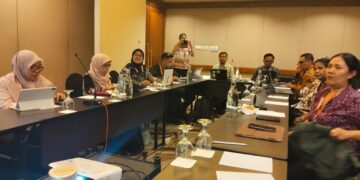
The message reinforced the importance of preparing students not only to interact effectively with increasingly sophisticated technologies but also to remain compassionate, critical, adaptable, and resilient individuals. For English language educators, this perspective provides an important foundation for developing learning environments in which technology is used meaningfully while human relationships and educational values remain at the center.
For the English Education Study Program of FKIP UMSU, participation in ICON-ABM 2026 was therefore more than an institutional presence at an academic conference. It served as an opportunity to strengthen scholarly engagement, exchange knowledge with fellow educators, explore potential academic collaborations, and reflect on the future direction of English language education in the era of AI.
Dr. Pirman Ginting expressed his hope that the benefits of the conference would extend beyond the event itself. “We hope that participation in events like ICON-ABM will not end with the conference itself. The knowledge, networks, and ideas gained should be brought back to our study program and translated into meaningful academic activities, research, teaching innovation, and collaboration,” he said.
Meanwhile, Selamat Husni emphasized that academic conferences should become spaces for continuous reflection and learning. “Academic conferences are valuable not only because they provide opportunities to present research, but also because they challenge us to reconsider our assumptions and listen to perspectives from other scholars. We hope to bring these insights back to our students and colleagues at UMSU,” he said.
The participation of Dr. Mandra Saragih, M.Hum., Dr. Pirman Ginting, M.Hum., and Selamat Husni Hasibuan, Ph.D. at ICON-ABM 2026 thus reaffirmed the English Education Study Program’s commitment to maintaining an active role in academic forums, strengthening institutional networks, and responding critically to the transformation of English language education. Through continued participation in academic and professional activities, the study program seeks to promote an approach to English education that embraces technological innovation while keeping humanity, critical thinking, authenticity, and meaningful learning at its core.